Gloucester sits between two very different jump-racing landscapes.
Follow the Severn north and you reach Worcester, where horses race on the flat riverside meadow of Pitchcroft.
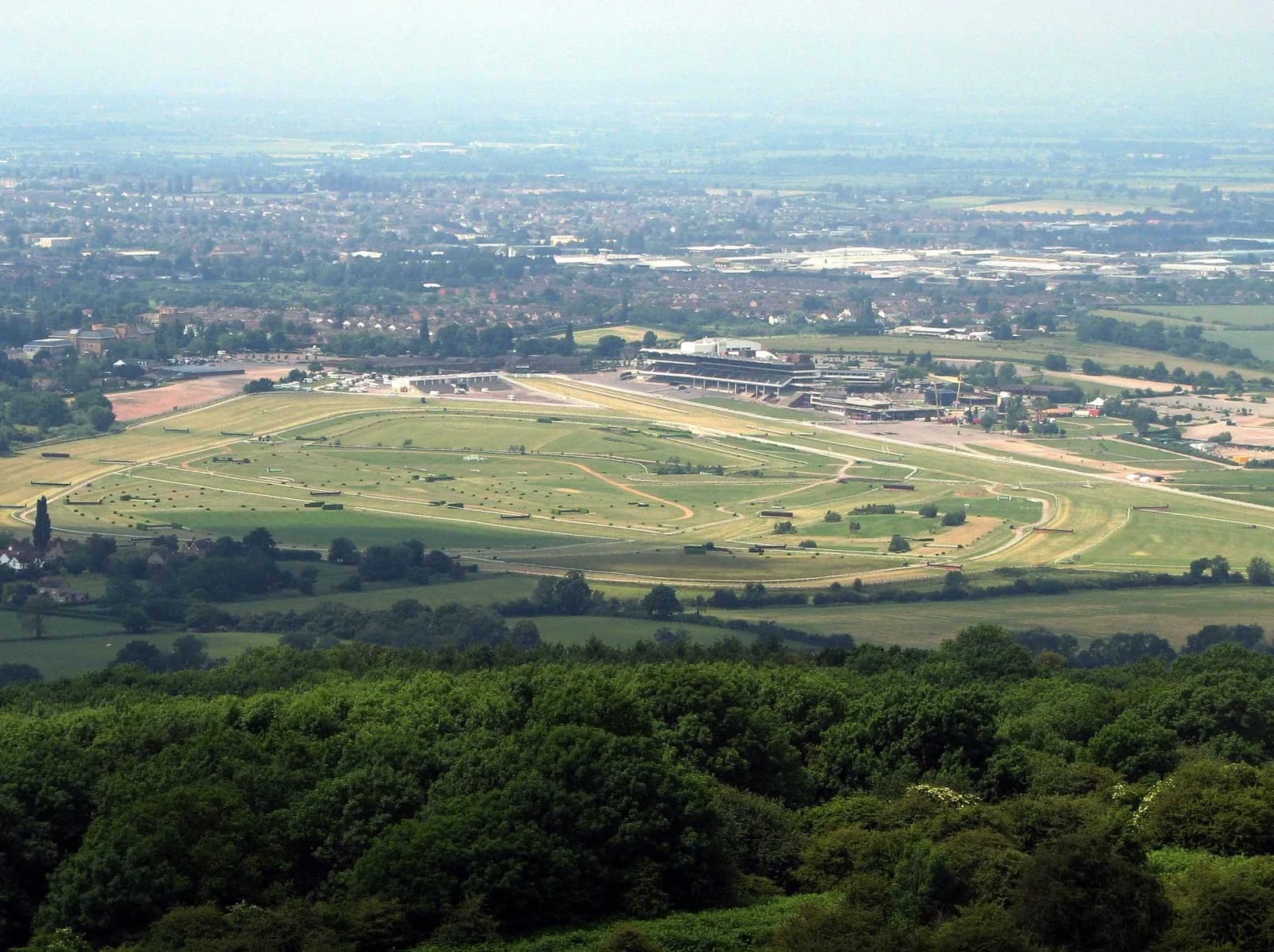
Head east towards the Cotswolds and Cheltenham Racecourse sits beneath Cleeve Hill, preparing to open its gates for a new season.
This October there are five racedays within easy reach of Gloucester, including an extra fixture added to the calendar at Worcester and the return of racing to Cheltenham for its two-day Showcase.
For jump-racing followers, this is the month when winter properly begins.
Five October race days
Worcester races three times:
Wednesday 7th October
Monday 12th October
Wednesday 21st October
Cheltenham then stages the William Hill Showcase on:
Friday 23rd October
Saturday 24th October
The first Worcester meeting is a late addition to the calendar.
Racing was originally due to take place at Ludlow on 7th October, but prolonged dry weather left the course unsuitable. An additional seven-race afternoon fixture was therefore created at Worcester instead.
Gates are due to open at 11.35am, with the first race currently scheduled for 1.35pm.
There is another unusual change five days later.
Worcester's meeting on Monday 12th October will consist entirely of steeplechases after chase races were transferred from Chepstow's Welsh Racing Festival because of dry-ground problems there.
Then Wednesday 21st October brings Worcester's final raceday of 2026.
Two days later, Cheltenham takes over.
When the jump season starts to feel serious
National Hunt racing never disappears completely during the summer, but October feels different.
The bigger yards begin bringing out horses that have spent months away from the racecourse.
Novice chasers start learning their trade in public.
Established horses begin campaigns that may eventually take them back to Cheltenham in March, or onwards to Aintree in the spring.
That is why the Showcase matters.
It is Cheltenham's first meeting of the new season and the first opportunity to see horses racing around Prestbury Park since the spring.
Friday's racing begins at around 1.15pm, while Saturday currently starts at 1.10pm.
For someone from Gloucester, it is one of the easiest opportunities of the year to experience Cheltenham without the extraordinary crowds and pressure of Festival week.
Gloucester's famous racing neighbour
Horse racing around Cheltenham dates back more than two centuries.
Flat racing took place on Nottingham Hill in 1815 before meetings moved to Cleeve Hill a few years later.
Early racing did not always meet with universal approval.
The Reverend Francis Close, an influential local preacher, became a fierce opponent of the races. Before the 1831 meeting, the grandstand on Cleeve Hill was destroyed by fire.
Racing eventually moved down towards Prestbury.
There were further interruptions and moves during the nineteenth century, but by the beginning of the twentieth century the sport had settled at the site racegoers know today.
Prestbury Park opened in its modern form in 1902.
From there, Cheltenham gradually became the centre of British jump racing.
How Cheltenham became Cheltenham
The meeting that eventually became the Cheltenham Festival had not originally belonged to the town.
The National Hunt Meeting moved around the country during its early years.
Cheltenham became its permanent home in the early twentieth century and the major races gradually followed.
The Cheltenham Gold Cup was first staged as a steeplechase in 1924.
Its history since then contains many of the horses that helped define jump racing.
Golden Miller won five consecutive Gold Cups during the 1930s.
Arkle won three in succession during the 1960s.
Dawn Run became the only horse to win both the Champion Hurdle and Cheltenham Gold Cup.
Then Best Mate won three consecutive Gold Cups between 2002 and 2004.
Those are the names associated with March.
October is where some of the stories begin.
A horse appearing at the Showcase this month may be back at Prestbury Park five months later with considerably more at stake.
Racing beneath Cleeve Hill
Cheltenham's setting is part of its character.
The racecourse sits in a natural amphitheatre beneath the Cotswold escarpment, with Cleeve Hill rising behind it.
The Showcase takes place on the Old Course.
It is left-handed, undulating and finishes with the famous climb towards the winning post.
That final hill has settled countless races.
A horse can appear to be travelling comfortably approaching the last fence or hurdle, only for the climb to expose how much energy it has already spent.
For racegoers, that makes the final stages particularly good to watch from close to the finishing line.
And unlike Festival week, October generally gives you rather more room to see it.
Worcester is a very different test
If Cheltenham is Britain's grand stage for jump racing, Worcester feels much more closely connected to its landscape.
Pitchcroft sits directly beside the River Severn.
Racing there can be traced back to at least the early eighteenth century.
The course originally staged Flat racing as well as jumps, but its last Flat meeting took place in the 1960s.
Today Worcester is entirely a National Hunt venue.
The track is left-handed, relatively flat and galloping.
That makes it a very different test from Cheltenham.
Where Cheltenham repeatedly asks horses to cope with hills and changes of gradient, Worcester allows them to build a rhythm across its long straights.
A horse that looks awkward around Prestbury Park may appear much happier travelling around Pitchcroft.
The opposite can also be true.
Racing on a floodplain
There is one thing Worcester can never escape.
The river.
Pitchcroft occupies floodplain beside the Severn, and flooding has shaped the racecourse throughout its history.
When the Severn rises far enough, there is very little the racecourse can do about it.
The extreme floods of 2007 submerged the track and wiped out much of the remainder of that year's racing programme.
For Gloucester readers, that relationship with the river will feel familiar.
The same Severn flowing beside Pitchcroft continues south towards Tewkesbury and Gloucester before widening towards the estuary.
An autumn raceday at Worcester therefore comes with a piece of advice that matters more here than at many courses: check the conditions before travelling.
This year, ironically, the immediate challenge has been the opposite.
The unusually dry weather affecting jump racing elsewhere is the reason Worcester has gained the additional meeting on 7th October and an all-chase card on 12th October.
Three Worcester meetings, then the finale
The newly added meeting on Wednesday 7th October gives Gloucester racegoers an unexpected extra opportunity to visit Pitchcroft.
Monday 12th October should be particularly unusual.
An entire card devoted to chases means fences rather than hurdles throughout the afternoon.
Then Wednesday 21st October is Worcester's final racing fixture of the year.
That makes the second half of the month feel like a handover.
Worcester finishes on Wednesday.
Cheltenham begins on Friday.
A good first visit to Cheltenham
Festival week can be overwhelming for someone who has never been racing.
The Showcase is a gentler introduction.
There will still be serious horses, major trainers and plenty of people who know their racing inside out, but the atmosphere is less intense.
Arrive early enough to explore.
Watch the horses in the parade ring before each race and then move towards the course as they head out.
There is no need to spend the entire afternoon studying a racecard.
Nor is there any requirement to bet.
If you do, decide beforehand what you are comfortable spending and treat it as part of the cost of the afternoon.
Under-18s race free at the Showcase when the appropriate free ticket is booked with an accompanying adult ticket.
And because this is Cheltenham in late October rather than March, layers and a decent coat are considerably more useful than trying to dress for Festival week.
From Gloucester to the races
Cheltenham is particularly straightforward from Gloucester.
Regular trains run between Gloucester and Cheltenham Spa, with the journey taking only a few minutes.
The racecourse is on the northern side of Cheltenham, so allow time for the onward journey from the station. Raceday bus and transport arrangements are published before each meeting.
Worcester is also connected directly by rail from Gloucester.
Worcester Foregate Street leaves you within walking distance of Pitchcroft, making it one of the easier racecourses to reach without a car.
That gives Gloucester an unusually good position between the two.
Three October afternoons beside the Severn.
Then two days beneath Cleeve Hill.
Making more of the month at home
There is no need to travel far for the history that links Gloucester to both places.
The River Severn has shaped the city for centuries.
Gloucester Docks grew dramatically after the Gloucester and Sharpness Canal opened in 1827, creating an inland port connected directly to the Severn estuary.
The Victorian warehouses remain one of the city's defining sights today.
A short walk away, Gloucester Cathedral tells a much older story.
Edward II was buried there following his death in 1327, and his tomb attracted medieval pilgrims whose money helped fund later rebuilding.
The cathedral's cloisters contain some of the earliest surviving fan vaulting in Britain.
Llanthony Secunda Priory, the docks and the old streets around Westgate make it easy to fill a morning before travelling onwards for an afternoon meeting.
And if the timing is right, there is another distinctly Gloucestershire spectacle.
The Severn Bore can send a visible wave upriver through the county on suitable tides.
Watching the Severn in the morning and horses beside it at Worcester in the afternoon would be difficult to beat for a local October day out.
Five chances to go racing this October
Worcester races on Wednesday 7th, Monday 12th and Wednesday 21st October.
The final Worcester fixture brings its 2026 racing season to an end.
Then Cheltenham begins its new season with the William Hill Showcase on Friday 23rd and Saturday 24th October.
The two racecourses could hardly feel more different.
One lies flat beside the Severn.
The other sits beneath the highest point of the Cotswolds.
For Gloucester, both are on the doorstep.
Check the individual racecourse websites before travelling for the latest race times, tickets, transport arrangements and ground conditions.